
Rempac Foam supplies and fabricates Explosion Suppressant Foam (ESF) for fuel tank safety applications across defense and aerospace programs. With over 60 years of foam conversion expertise, we deliver passive, mission-ready protection solutions for ground vehicles and aircraft — from concept through full production.
What Is Explosion Suppressant Foam (ESF)?
Explosion Suppressant Foam (ESF) is a reticulated polyurethane foam designed for installation inside fuel tanks on military vehicles and aircraft. Its highly porous, open-cell structure allows normal fuel flow while disrupting the physical conditions required for a catastrophic explosion.
Unlike active suppression systems, ESF requires no moving parts, no sensors, and no activation — it is always on.
- 98%+ open void volume — allows free fuel flow while occupying critical vapor space
- Interconnected skeletal structure — disrupts flame propagation pathways inside the tank
- Fuel-compatible — compatible with gasoline, diesel, and JP fuels used across military platforms
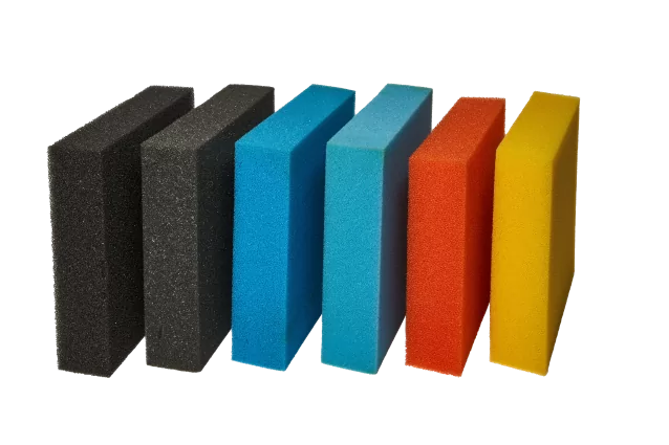
Fuel Tank Vulnerabilities & How Foam Responds
Combat fuel tanks face multiple ignition threats, including ballistic impact, heat, sparks, rapid pressure changes, and IED blast shockwaves. Rempac’s reticulated foam addresses each of these threats simultaneously through passive chemistry and physics:
- Blocks flame propagation – foam breaks the tank interior into small pockets, preventing flame fronts from traveling through fuel vapors
- Dissipates heat – skeletal structure absorbs and spreads heat, eliminating localized hot spots that could ignite vapors
- Minimizes vapor space – less open volume reduces the chance of forming a flammable air-fuel mixture
- Prevents fuel sloshing – reduces surge during aggressive maneuvers, limiting static buildup and vapor generation
- Disrupts shockwaves – foam structure dampens pressure waves, preventing full-tank detonation
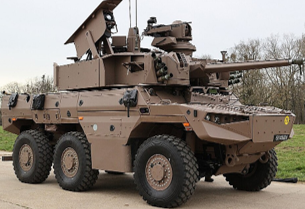
Engineered for the Combat Environment
Reticulated polyurethane foam is the right passive safety choice for military platforms because it is:
- Lightweight — does not significantly impact vehicle payload or operational performance
- Fuel-compatible — resistant to gasoline, diesel, and JP fuels used across land and air platforms
- Flexible & durable — conforms to complex tank geometries and maintains performance under operational stress
- Retrofit-ready — can be installed in existing tanks without major structural modifications
From the battlefield to the flightline, reticulated foam delivers reliable, maintenance-free protection for both land and air military platforms.
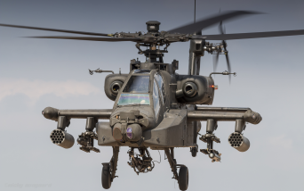
A Passive, Always-On Safety Layer
Reticulated polyurethane foam does not prevent all ignition — but it prevents ignition from becoming catastrophic. By controlling vapor behavior, interrupting flame travel, and absorbing energy inside the tank, it acts as a passive, always-on safety system that:
- Requires no maintenance or activation
- Adds minimal weight to the vehicle or aircraft
- Aligns with established military qualification standards
- Works equally across land vehicles, rotary aircraft, and fixed-wing platforms
Military Standards & Qualification References
Rempac works with reticulated foams aligned to established military specifications. While exact requirements vary by program, our team is knowledgeable in the following qualification standards and supports customers in ensuring proper material alignment during design and procurement:
- MIL-DTL-83054 — Explosion Suppression Foam for aircraft fuel tanks. Defines performance requirements for foam that prevents explosion upon tank rupture or ballistic penetration.
- MIL-PRF-87260 — Fire-resistant materials for aircraft and land-vehicle fuel systems. Establishes thermal and chemical resistance standards across military fuel environments.
ESF Capabilities Overview
Rempac supplies and converts ESF for fuel tank safety across defense and aerospace programs. Key product capabilities include:
- Passive system — no moving parts, no activation required
- Dual function — serves as both explosion suppression and fuel baffling in a single system
- Tank compatibility — works with rigid and bladder-style fuel tanks in ground vehicles and aircraft
- Safety improvements — reduces risk of fuel vapor ignition, mitigates fuel spray during rupture events, and controls sloshing and surge within tanks
Custom Fabrication for Defense Programs
Rempac converts bulk ESF materials into fully customized configurations tailored to your vehicle or aircraft’s fuel system geometry.
Fabrication Capabilities:
- Die-cut parts, CNC cutting, and specialty fabrication
- Multi-layer assemblies
- Complex shapes to fit internal tank configurations
Integration Options:
- Pressure-sensitive adhesives (PSA)
- Laminations and coatings (as applicable)
- Multi-component assemblies

Our foam is designed to conform around fuel system components including pumps, sensors, lines, and valves — in both rigid and bladder-style tank configurations. Rempac supports programs from initial prototyping through full production scale-up.
Why Partner with Rempac?
Rempac is not just a supplier — we are a manufacturing partner invested in your program’s long-term success.
Flexible & Responsive:
- Works with customer-specified materials or approved supplier lists
- U.S.-based production with domestic program support and fast turnaround
Consistent Quality:
- Part-to-part consistency and reliable lead times you can plan around
- Cost-conscious fabrication without compromising standards
Collaborative by Design:
- Work directly with your engineering teams — from concept through production
- Support design-for-manufacturability (DFM) and prototype-to-production transitions
- 60+ years of foam conversion expertise and a commitment to repeatable, innovation-driven partnerships